This post may contain affiliate links. Every link is hand-selected by our team, and it isn’t dependent on receiving a commission. You can view our full policy here.
At first, I tried to ignore it. Or downplay it. Everybody was buzzing with concerns about the coronavirus—which really ran the gamut, including a colleague whose parents urged everyone to buy lobster, because somehow it was going to be cheaper than ground beef?
It was early March 2020. I had plans to visit my family in Florida. “Overpack,” my mom insisted. “You need to get out of New York, and if you come here, I think you’ll be here for a while. I think you’ll be here for two months, at least, before you can go back.”
I laughed it off at the time, but also, as reports grew ever graver about the outbreak in the city, and as my office shut down after a case was reported in our building, a little part of me became all the more convinced I needed to get on that plane.
Friends discouraged it. “Do you really think it’s smart to get on a plane right now? Where you’ll be exposed to all those germs with everything that’s going on?”
I got on the plane anyway. If the coronavirus became a pandemic, and things were shut down for weeks—or, as my mom feared, two whole months—I wouldn’t want to be in New York. In the winter.
And, if I were being honest, I finally had an out.
I wasn’t like most people I met who’d moved to the city chasing a dream. Their eyes gleamed when they talked about Manhattan; they loved the rooftop happy hours, the subways, the constant buzz of activity. For me, it was where my industry was. It was where my husband worked. It was the place that allowed us to have the jobs we wanted.
I had an excuse to leave. I shouldn’t have needed one; I did, and I clung to it.
It didn’t have the beach culture or the laid-back vibe of the Florida city I grew up in. It didn’t have my family, and the city seemed so transient that I struggled to have a sense of community. Every three or so years, everyone I knew would move away. Like a snake shedding its skin, the city would writhe with new life, and gradually, gradually, I’d make new friends.
But I was getting tired of the grind on all fronts. The constant rebuilding of community. The crowded loneliness. The hour-and-a-half commute, because we couldn’t afford to live in the city anymore, not with a baby in daycare. The getting home at bedtime, rushing through chores and bedtime routines until I collapsed, before my alarm clock buzzed and sent me jolting out of bed to do it all over again.

I had an excuse to leave. I shouldn’t have needed one; I did, and I clung to it. There was an outbreak in the city; it was only getting worse. And my family had plane tickets to a warmer climate, with more space to roam, where we could have a pandemic bubble before we even knew about pandemic bubbles.
It seemed so stupid to get on a plane in early March that for a while afterward, I played dumb, like I went along with my trip without fully comprehending the severity of it all. Then, after landing, when the world shut down and nonessential travel was halted, I was stuck there. It wasn’t my fault! We were all working remotely anyway, so I might as well be someplace where my parents could help us watch our daughter, as we juggled shifts to care for her and tackle a full workday.
Oh, did I mention that? My husband, 1 1/2-year-old daughter and I were living with my parents, under one roof. It was an unconventional setup, but then again, these were unconventional times.
Trading ‘Content’ for Contentment
Looking back, six years later, I think a tiny part of me hoped I’d get stuck in Florida. I had been feeling so burned out being in New York, but I couldn’t get off the hamster wheel I’d spent every day since middle school fighting for: the media industry! My job had become a core pillar of my identity, and I couldn’t disentangle myself from it. Even when former colleagues asked me about my hobbies outside of work. I was doing what I loved! My job contained my hobbies! What were they even talking about?!
Everything was content, as the memes go, and I was proof: Even my early pandemic Instagrams weren’t simply snapshots of life in lockdown. I had to create a series of hands-and-pans videos turning cupcakes into pop culture references. It was a way to entertain and preoccupy myself, a creative outlet that felt productive, and even turned into a story or two for—you guessed it—work.

It wasn’t my job’s fault. I didn’t know how to be. Even in my downtime, I was a flurry of activity. I needed to tidy the house, do the dishes, fold the laundry, vacuum the floors before I could even think of sitting down to watch a show. And the moment I did, I’d often feel restless. I’d search for something to cross off my to-do list.
It’s the way I’d been since high school, when a string of deaths of classmates (all car accidents) ensnared me in an existential crisis, where the ticking of life’s clock and the uncertainty of it all rang at a deafening volume in my ears.
And now, with the pandemic, it was back.
The Strange Ritual of Quarantine Life
This time, I was forced into a slowness. We were all sheltering indoors; my big thrill was my daily lunchtime walk, where I’d push a stroller and listen to podcasts as I hoped the thrum of the wheels on pavement would lull my then-1-year-old daughter to sleep (it often did). We were so fortunate; so privileged to be able to fly to Florida and have our family open their home to us for months.

Watching TV became a collective sport—a way the world connected when we couldn’t do anything else. The early days of 2020 are marked by eras of shows: Tiger King, Ryan George’s Pitch Meetings, the short-lived but uplifting Some Good News.
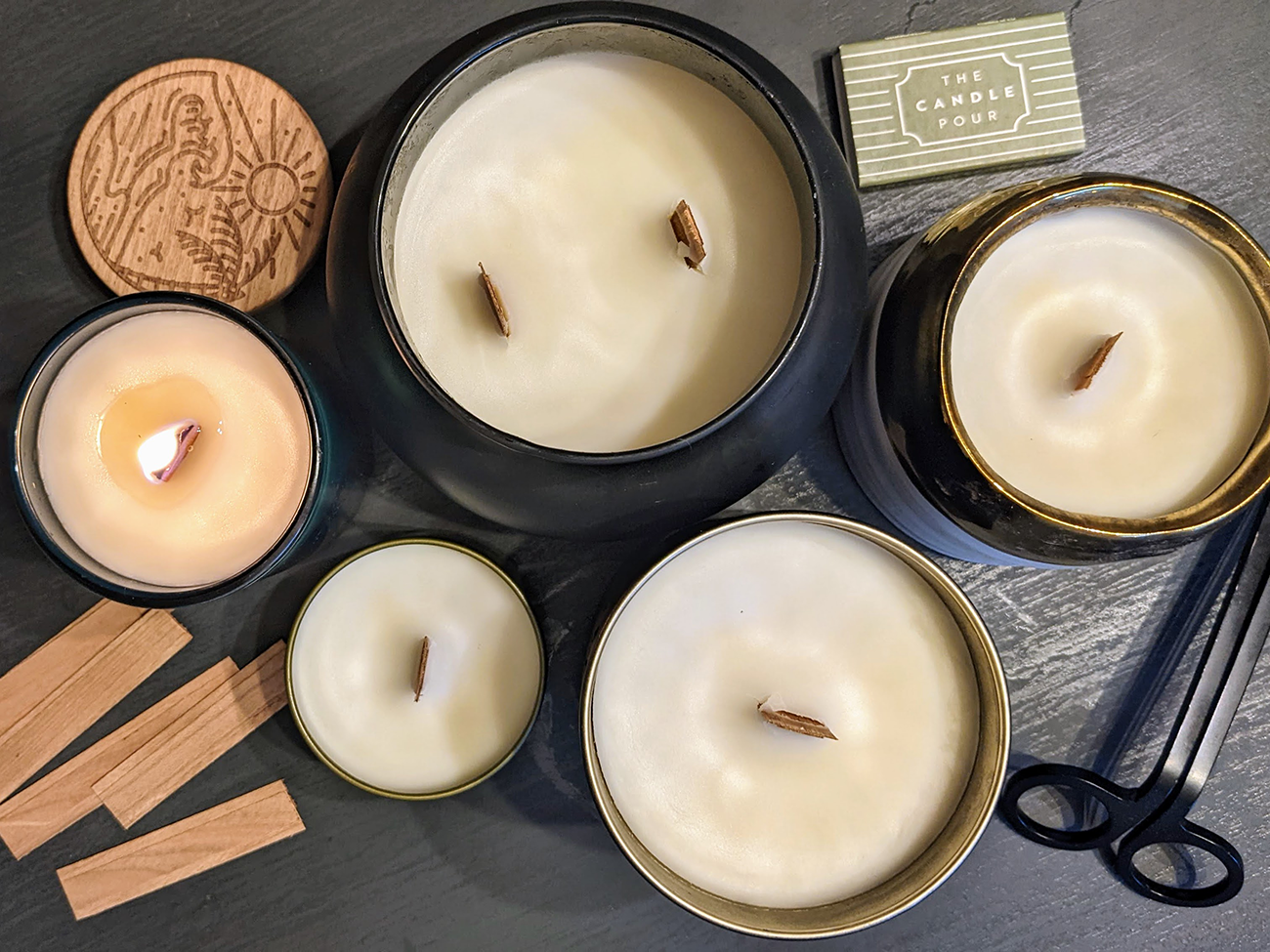
I got into a hobby-swapping loop, ultimately finding peace in candle making, of all things. It’s a creative outlet I continue to this day; a simple craft that requires little time, ultimately producing something useful.
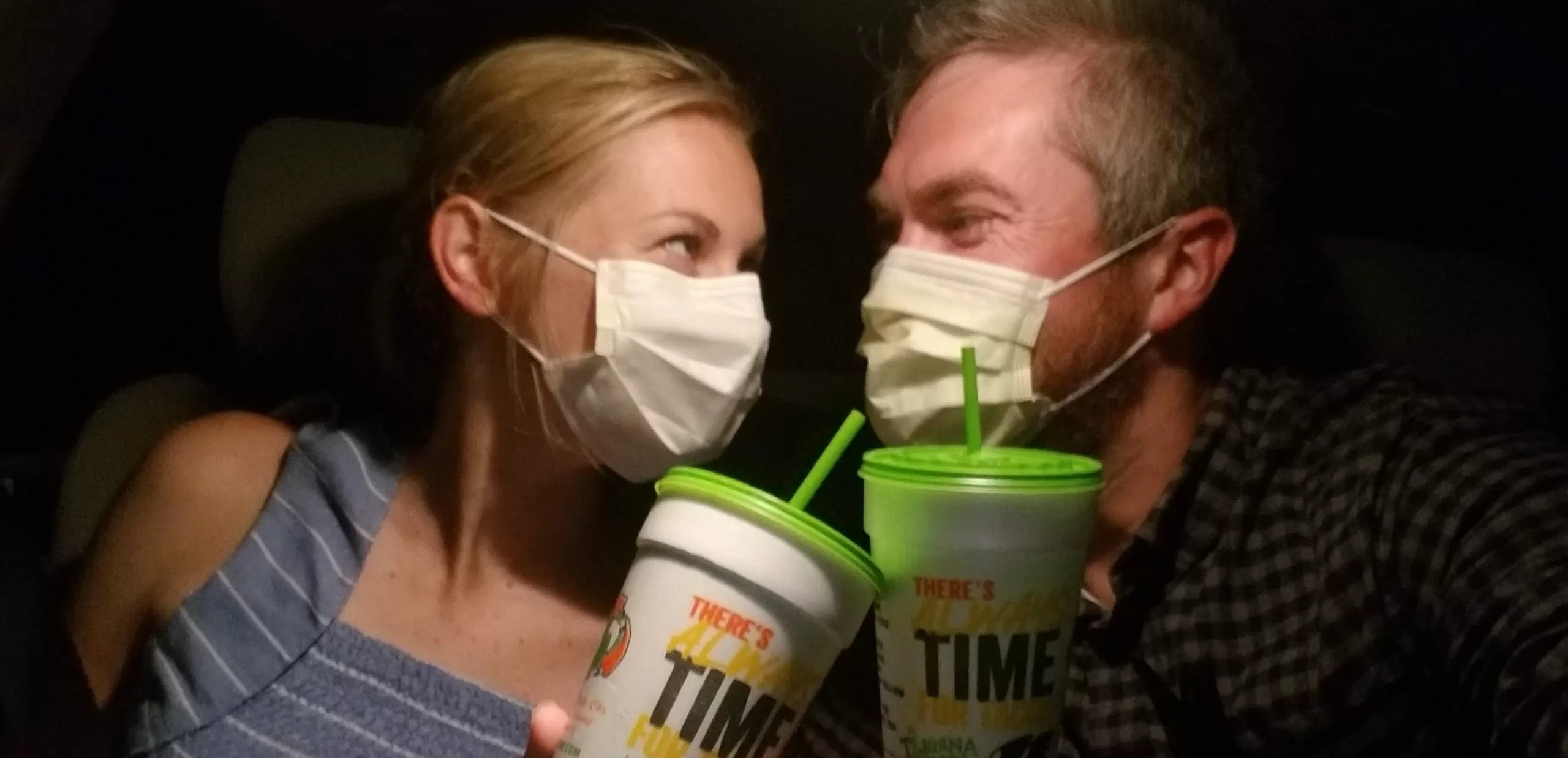
Life continued this way for six months, until it felt a little absurd to be sheltering at home, with my parents. I had to face reality—the life I left behind in New York.
Over five days, we gradually drove back to Long Island, unsure of what we’d find. Exploded, expired milk in our fridge. Dead plants. Withered relationships that gave way to the loneliest months of my life.
For the first two weeks back, after self-reporting our return to New York, the state government sent me a daily text to check on my symptoms. If I didn’t respond by 10 a.m., they’d sometimes call me.
Over a 30ish-minute phone interview, they briefed me on my mandatory 14-day quarantine. We couldn’t leave our property for any reason. They didn’t want us opening our luggage, doing laundry or even cooking, for that matter, during the two-week period.
“Could someone prepare and drop off meals for you instead?” the contact tracer asked me. (No, no they could not, I insisted, though I did commit to grocery delivery during that time.)
It was extreme, though in that first year—before the research on the virus and how it spread caught up—we were all operating out of an abundance of caution, figuring things out as we went.
It seems stranger than fiction, but so often, life is.
(I still look back at those daily check-ins and my initial screening call with surprise. Most people do too, when I tell them that story, especially since Nate self-reported too and never received such a call, or even the daily text check-ins.)
Ultimately, though, we were safe. After the quarantine, Em was back in daycare, and there was the promise of a vaccine on the horizon. But my outlook was bleaker than ever.
New York held nothing for me, when it wasn’t tethered to my work. I could do my job from anywhere, and now that I had, very slowly, started to learn what I liked to do that wasn’t basing my self-worth on my professional achievements, I had even less of an idea of how to exist there—I hadn’t created roots or a sense of community. I just had a routine.

I jumped at the chance to drive back to Florida that December, quarantining and going all in on buying a rental property. Again, I lied to myself: It was going to be an Airbnb! Another source of income! A nest egg for our future!
But really, in my heart of hearts, it was a home in Florida. Our home, where we could rebuild our lives as I rebuilt my identity amid lockdown. We still weren’t going anywhere, but somehow, being in the sunshine and being able to “pod up” with our parents—without sharing the same roof, because goodness knows they could use a break from us too—felt peaceful.
We spent another six months—late December through the beginning of July—in Florida, getting the house ready to be rented out. At that point, we’d been vaccinated, and the world was slowly opening back up, including our offices.
New York beckoned.
This time, I was ready for it.
For years, I thought home was a place. New York, Florida; somewhere I was supposed to plant roots.
It turns out it was something much smaller and quieter than that: sunshine on my face, inside jokes during TV shows, a toddler asleep in the next room while I poured candles at the kitchen table.
It was in the parts of life that exist outside the hustle. Those are the things worth running toward. And anchoring a life around.