This post may contain affiliate links. Every link is hand-selected by our team, and it isn’t dependent on receiving a commission. You can view our full policy here.
Far too often, when it comes to my career, I’ve obsessed over making the “right choice.” It seemed like every few years I’d be at a crossroads of a new role, or I’d be bored in my current one, and I’d consider taking on a completely different path. And, subsequently, try to play out each scenario endlessly, envisioning where I’d be happiest—and if I were on the verge of making the Worst Decision of My Life™.
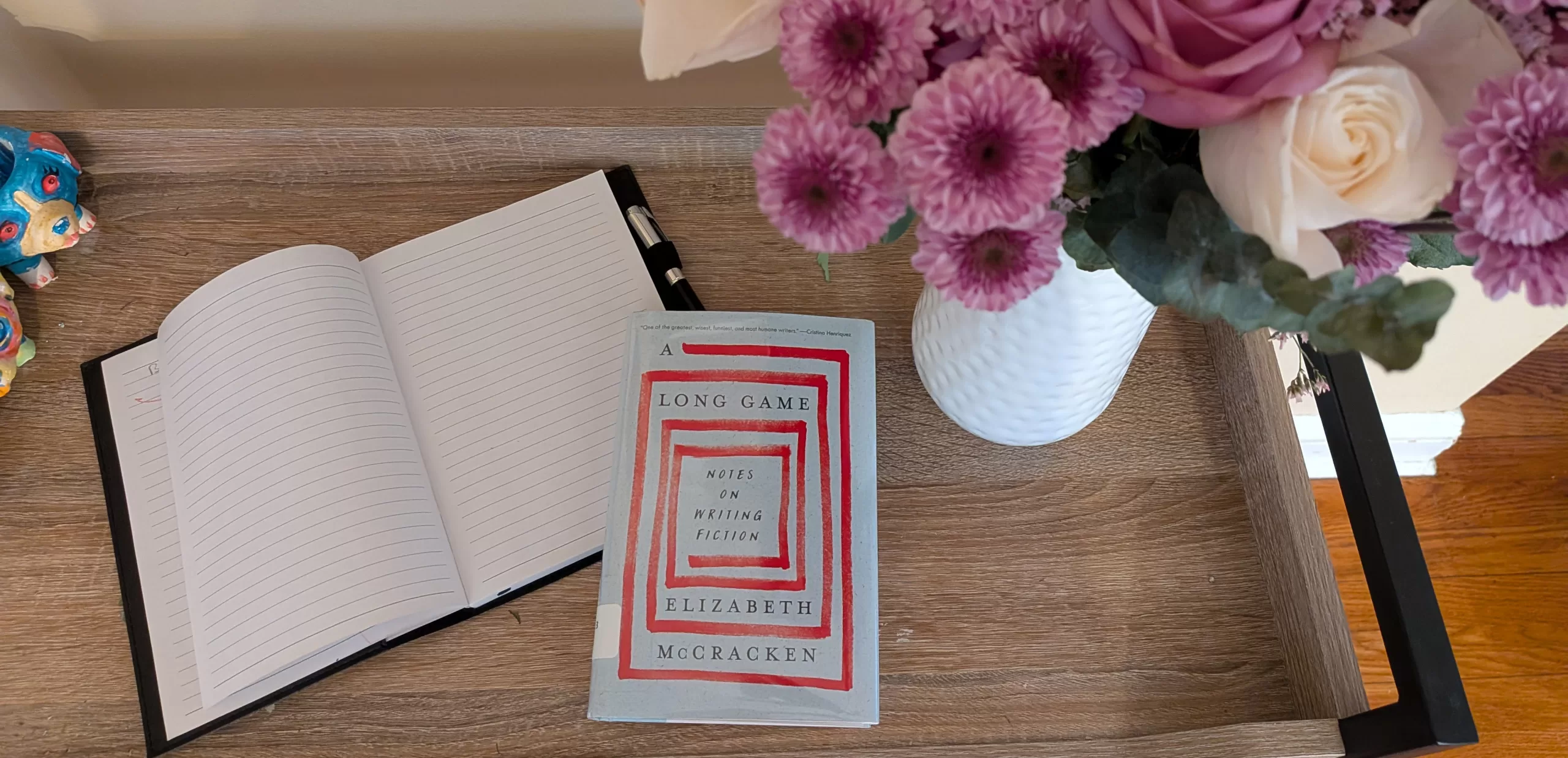
Considering all the weight I’d put on trying to find the most meaningful job—after all, an entire third of this website is devoted to “fulfillment“—I felt slapped by two clichés at once as I read Elizabeth McCracken’s A Long Game: Notes on Writing Fiction. Written as a series of notes, it was No. 244 that felt like I was taking in a breath of fresh air. It evoked (ahem, cliché No. 2) a sigh of relief.
“Any job that allows you to daydream is good for a writer,” she begins, explaining that early in her career, she worked at a library, doing something writing adjacent but not directly writing. “I recommend jobs that you think you could do forever. They don’t need to be completely fulfilling. Ideal for them to be at least minorly fulfilling, or to give you a different sort of meaning than your writing.”

The library gig wasn’t all consuming, and it rarely required her concern outside of work hours, so she had the mental bandwidth to write fiction in her downtime. (She later cautions against a full-time job that’s too close to your creative passions, particularly when it comes to fiction writing. Often, the job winds up so demanding that they give up writing.)
I think that’s the big thing: Many creative pursuits aren’t full-time jobs, so maybe the most meaningful way for you to live isn’t to be a full-time writer or painter or poet; maybe it’s finding the “minorly fulfilling” job that pays the bills and yet leaves you with enough time to tackle your passions on the side.
Often, that last part is shared with a hopeful addition: Make your creative pursuits a side hustle…until the day when you earn enough to do it full-time!

That could be the case, but there’s also a solid case for allowing yourself to have two career tracks at once, especially in today’s gig economy. Having dedicated time outside of your craft can fuel and inspire your creativity. It can get you out of your head and into the world. Not to mention provide a steady paycheck and baseline sense of security.
“Minorly fulfilling” is the key here; you can’t see it as a dead-end job or a paycheck you push through to do what you want in your downtime. Then you’ll start to resent those work hours and grow embarrassed of the time you’re not spending in the prestigious pursuit of your art. Suddenly, you’re contemplating whether you’re wasting your days and have—uh oh—made the Worst Decision of My Life™.
It’s a vicious cycle, isn’t it?
But it doesn’t have to be, and that’s the reframe. If you’re in a place where the thing you want to do can’t be a full-time job, what types of jobs can you enjoy that still give you the mental bandwidth to pursue that other thing? What would be at least minorly fulfilling?
I’d add that the “minorly” fulfilling role also needs to come with a dose of daring and discipline. You have to believe your work is worth pursuing—and dedicate pockets of time to do it. Block it off in your planner, safeguard it; as McCracken notes, “nearly any job will fill up any time you allow.” So pay attention to what you’re allowing.
You can find A Long Game: Notes on Writing Fiction on Amazon, at most major bookstores (including Bookshop.org) and at your local library.