This post may contain affiliate links. Every link is hand-selected by our team, and it isn’t dependent on receiving a commission. You can view our full policy here.
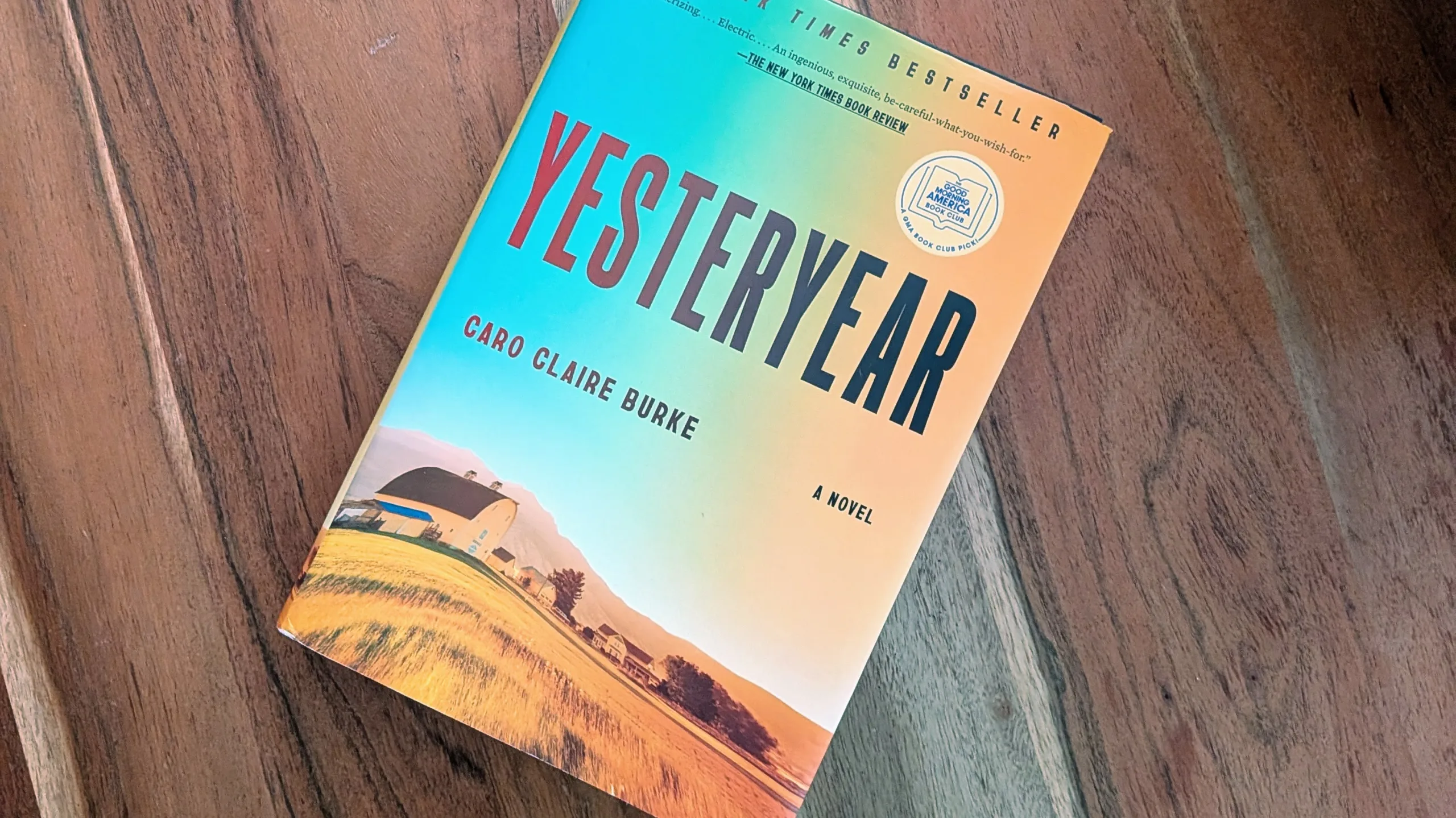
If it seems like everyone you know is talking about the trad-wife-trapped-in-the-Wild-West mind-bender Yesteryear, you’re not imagining things.
It’s a New York Times bestseller. It was Good Morning America‘s April 2026 Book Club Pick. And the Indie Next List top pick. When I went to borrow it from my local library, I was 466th in line. A colleague told me she was well past 500th at hers.
It’s already slated to be adapted into a movie, with the film rights sold two years before its debut. (Anne Hathaway will produce and star in it, BTW.)
And yet.
It is an infuriating read.
The premise is intriguing, posing a twist from the jump that makes you want to read on: A tradwife influencer runs a ranch called Yesteryear with her husband and six kids, only to wake up one morning in a house that’s hers—but not quite. With a husband and kids who are a lot like hers—but not quite them. All signs of modern technology are gone; she’s living like it’s the pioneer days.
How will she get back to her old life? Is this a dream? A drug? A Truman Show-like social experiment?
The chapters alternate between timelines—her life in the present, her newfound world trapped in the past and her life leading up to those moments. The style reminded me of the alternating landscape and plot-driven chapters in The Grapes of Wrath (not to mention the internal struggles), and like that book, I’m sure this one will linger with me long after I read it.
While I kept reading, I did nearly quit during the first third and wound up reading in short sprints, just because the narrator, our influencer Natalie Heller Mills, is such an intensely acidic personality—and honestly, so is everyone she seems to encounter. She grumbles about the “Angry Women” who love to hate-watch her content, but she seems surrounded by angry men and women. And she herself is one. She seems destined to snap, to fail and flounder, and while much of her undoing is her at her own hand, I found myself raging at everyone and everything.
There were times when I’d get so annoyed at various characters I’d want to hurl the book across the room.
But really, what challenged me the most was the voice and writing style. Natalie is so loaded with tension—such anger, such bitterness at times suppressed so deeply, at others lashing to the surface with a hurricane-like force—that it’s hard not to read it and feel it yourself. It can stick with you, long after you’ve put the book down, coloring the way you see the next few minutes.
What makes Yesteryear so compelling: It’s a battle for control from all sides.
Interestingly, as Natalie begins to take control of her life—working with her perpetually-aspiring-presidential-candidate of a father-in-law to turn her husband into a farmer, taking an online course to learn how to become an influencer—I began to live alongside Natalie’s tension, not be consumed by it.
And that, when you get right down to it, is what makes Yesteryear so compelling: It’s a battle for control from all sides. What will Natalie do to have control over her life and everyone in it? And how much of your life and its outcomes do you have control over?

She engages in this constant performance to prove herself, sacrificing the chance to be present in the world—and, ultimately, straight-up denouncing it—for the illusion of control and the sense of security that comes with it. It’s that tension that’s so hard to sit with, that makes the book so challenging to read—and yet keeps you reading on. You know a plot twist is coming, and you can kind of guess where it’s headed. (Though I take issue with how cleanly everything falls into place; to quote Ryan George, how she wound up in her pioneer-era existence feels “super easy, barely an inconvenience” with little more than a “some time in the future,” accept-this-as-it-is transition.)
It holds a mirror up to the performances in our own day-to-day lives; the ways we attempt to control the way we’re perceived and how, in many families, we can view our relatives as an extension of ourselves, and thus try to curate them in an image that further makes us look good. The behavior’s warped to funhouse-mirror proportions, packaged in a zeitgeisty concept of tradwife living, but the message sticks. Control of others’ perception of you is a losing battle. And trying to control everyone in your world in the process is waging a war where everyone loses.
You can find Yesteryear at most major bookstores, as well as on Amazon, and at many libraries (though you may be 467th in line for it.