This post may contain affiliate links. Every link is hand-selected by our team, and it isn’t dependent on receiving a commission. You can view our full policy here.
Whether you’re a student, teacher or someone in need of a halfway-through-the-year fresh start, a mid-year or academic planner can be a game-changer. Starting in July and running through July of the following year, these planners let you get organized right at the start of a new school year—or ahead of the third quarter—but these styles vary greatly, in terms of organization, design and price point.
Which one is right for you? As a hardcore paper planner user, I have thoughts, especially after talking to students and university alumni about their biggest pain points with paper planners. But to me, it’s more useful if I add context to these reviews, comparing the best academic planners and mid-year agendas side by side, so you can choose the ideal organizer for your needs.
The Best Mid-Year/Academic Planners of 2026-2027, Tested & Compared

1. The Best Overall Academic Planner: Papier Academic Planner
If you want to give someone a great going-away or graduation gift, this is the planner to buy. Papier features several academic planner covers, with hardcover and spiral-bound options, but my favorites are the ones that allow you to customize the cover text and images. The Best Year Yet style lets you select the binding style, choose between two colors (cream or blue) and fully personalize the cover text and image.
Even with all that, the planner ships quickly, and the interior is every bit as impressive as the exterior. Each week is a two-day spread, with each day represented as a column. I like to use the top half to time-block appointments and meetings, then use the bottom half to list to-do’s each day. Unlike the Papier Undated Planner, the Academic version spans an entire year—August to July—making it a bit cheaper per year.

2. Most Innovative Mid-Year Planner: Laurel Denise Academic 2026-2027 Planner
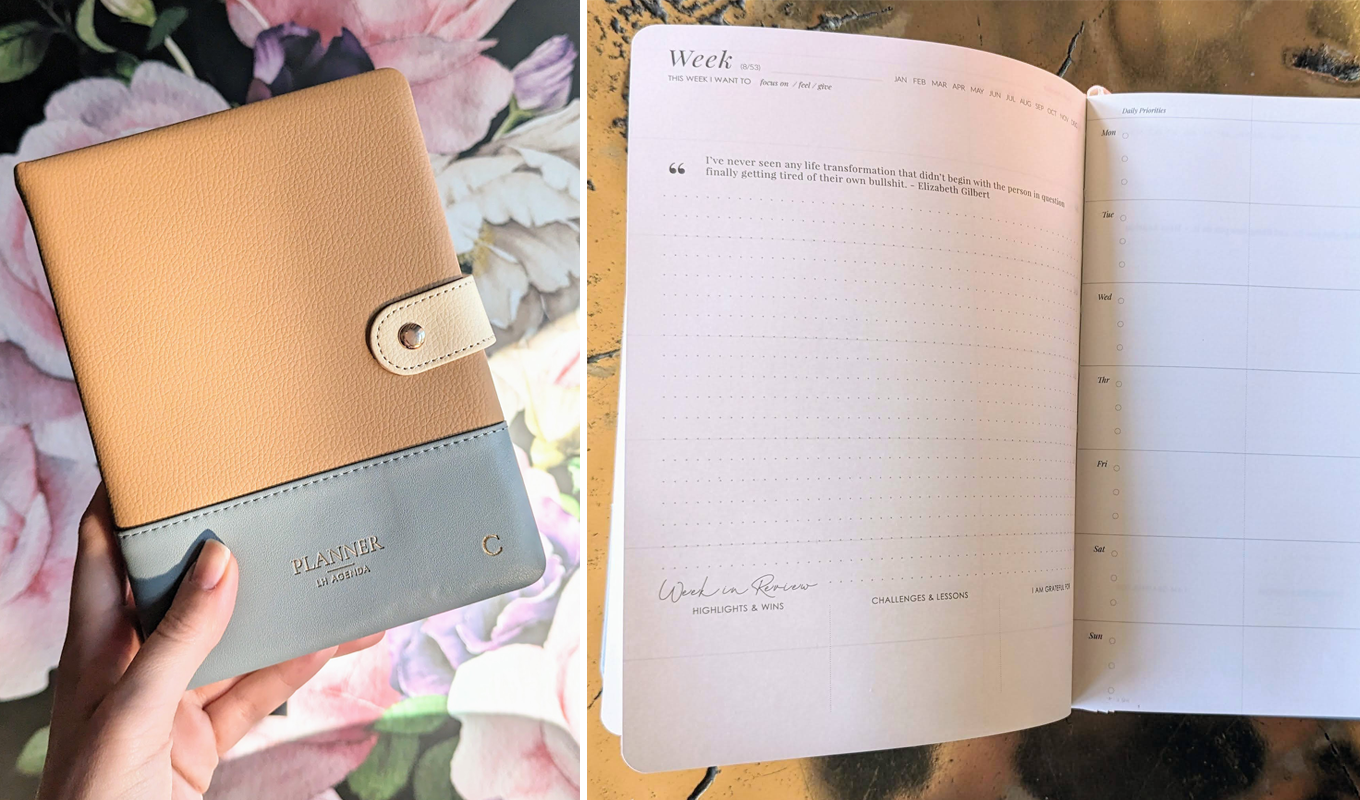
Laurel Denise’s range of planners prides itself on being designed for “the way you think,” and it got me thinking in a whole new way. The slim, horizontal design—more akin to a photo album—got my attention, but the interior is what kept me using it. Each month features five “short pages” that allow you to see the entire month and the week at once, which are easy to flip to, given the included removable, clear bookmarks.
The design is particularly helpful for anyone into time-blocking to organize their day, yet the design also includes yearly goal planning, bullet-style note-taking areas and a daily habit tracker. It’s more of a splurge, and if you need to break down large goals or tasks to ensure you’ll actually get them done, this is the way to go.
Laurel Denise stands out for offering a range of planner formats that are unlike anything else on the market. It can be a little overwhelming at first, which is why they offer a quick quiz to help you find the agenda that best fits the way you think.

3. Best Undated Academic Planner: Notcoy Daily Planner
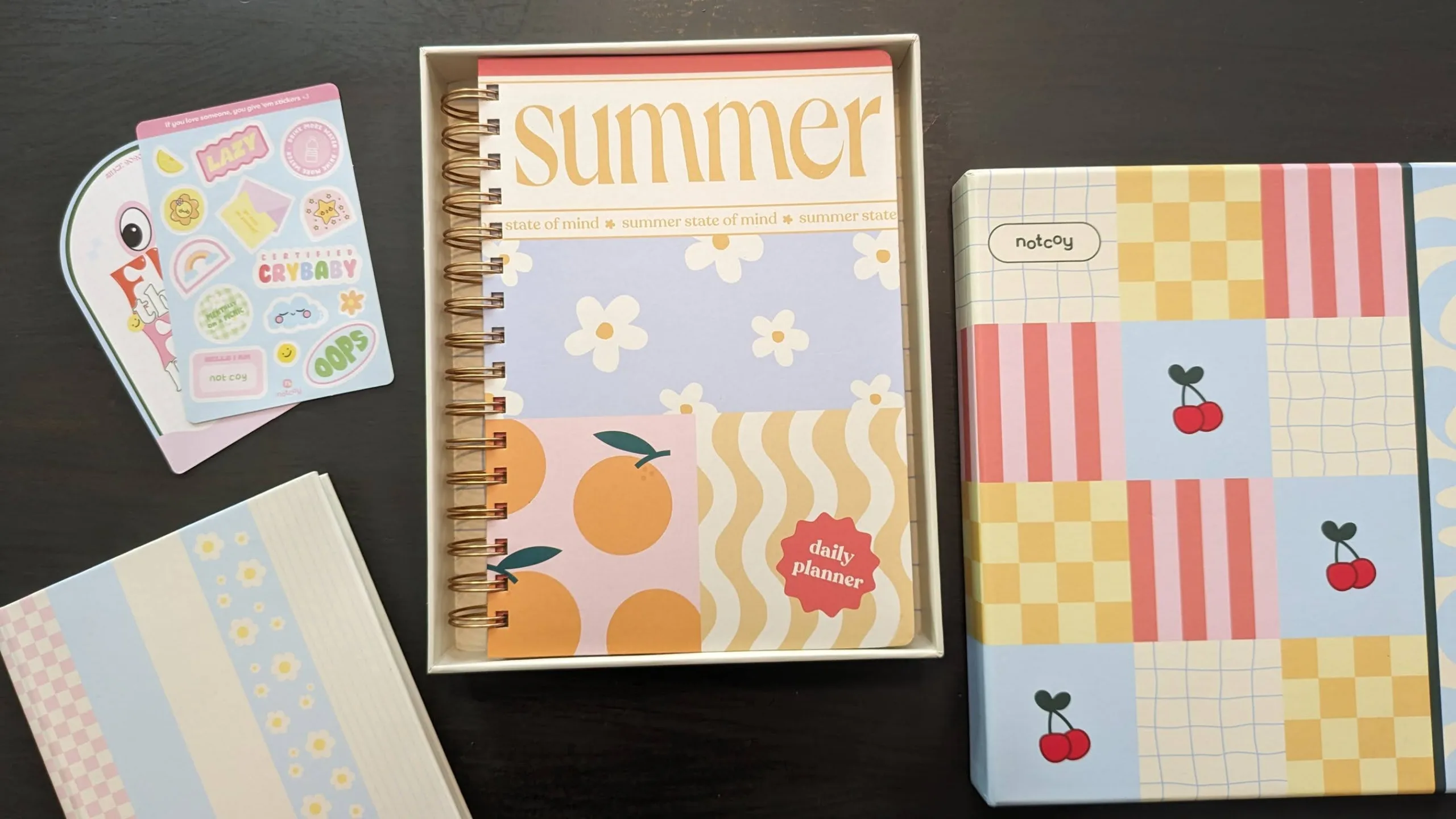
Life is heavy enough, and tracking everything that’s on your plate can be stressful. If you can relate, you might need a planner that doesn’t take things too seriously. (Or, if you typically abandon planners three weeks in, maybe you need a style that makes updating it fun.) Each spread in Notcoy’s undated planner breaks down the day simply, getting you to narrow your focus to the essentials: your top three priorities, up to five classes or meetings in a “schedule” section, a to-do list and a few lines for stray notes. (Curious to know more? See my in-depth review here.)

4. Best Full-Size (8.5″x11″) Planner: At-a-Glance Academic Planner
When you’re already hauling textbooks, binders and folders all roughly the size of a standard sheet of paper, it’s kind of convenient to have a planner the size of a spiral notebook (only with a more durable cover). Each two-page spread spans the full week, as shown above, giving you decent space to write down the day’s tasks. (I tend to divide it into two columns; one for scheduled meetings and one for that day’s to-do’s, often jotted down stream-of-consciousness style.)
Tabs are included, so you can flip from month to month, and the monthly calendar spreads have a column for to-do’s, though I found I tended to prefer having a fresh list for each week, rather than one for the month.
Not Sure What to Pick? To Choose the Best Planner for You, Ask Yourself:
- What size planner are you most likely to carry around?
- Too bulky = you’ll never use it, too small = you can’t fit everything you need to write
- How much space do you need per day to write down the day’s tasks?
- Do you like to block out your meetings/appointments, so you prefer an hour-by-hour breakdown of each day? Or just a blank space to write whatever comes to mind?
- Do you prefer dated or undated?
- Undated lets you start anytime, yet you have to keep writing in the next day/week/month’s dates, which can be tedious (especially if you’re trying to plan ahead)
- What kind of binding/cover appeals to you the most?
- Do you prefer a spiral-bound book that lays flat, so there’s no fighting to keep it open? Or hardcover, for a more polished appearance? Or softcover and a stitched spine, so it’s flexible?